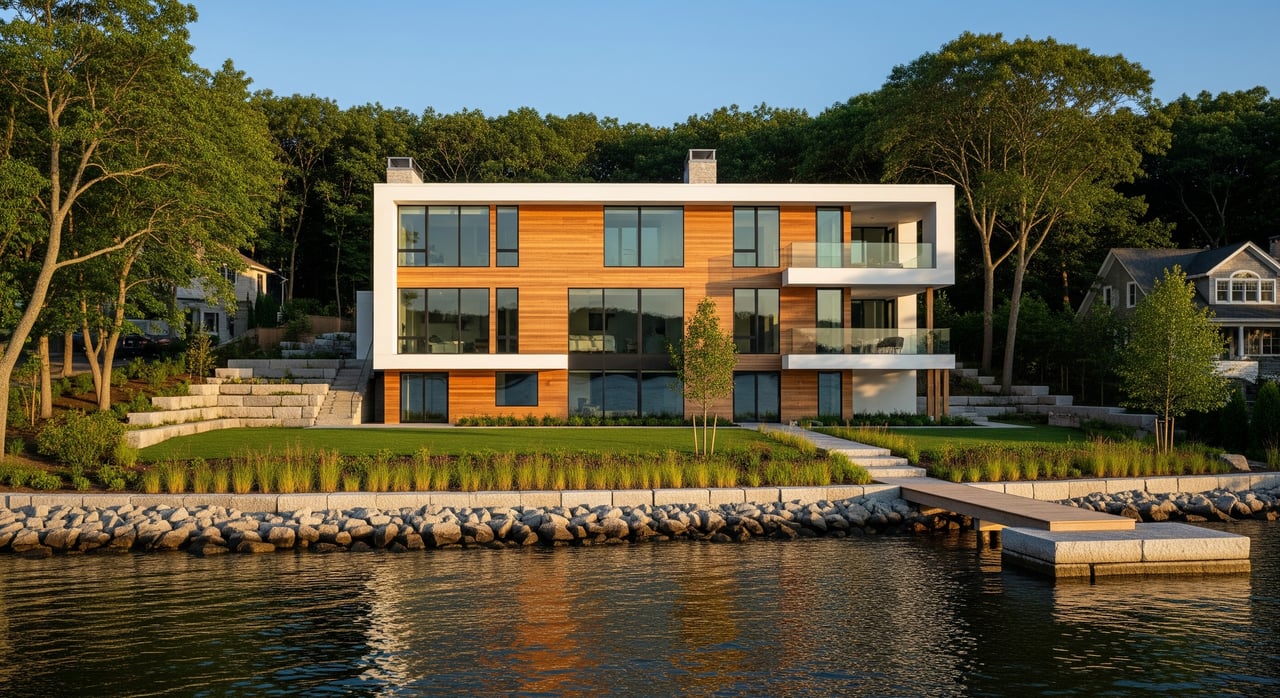
Thinking about adding a dock, patio, or an addition near water in Winchester? You are not alone. Projects near ponds, rivers, or wetlands can add a lot of enjoyment to your home, but they also come with rules that can affect design, timing, and cost. In this guide, you will learn what triggers conservation review, how Winchester’s process works, and the strategies that keep approvals moving. Let’s dive in.
What triggers conservation review
If your work will remove, fill, dredge, or alter wetland resource areas, you will likely need review. That includes inland ponds and lakes, streams, bordering vegetated wetlands, banks, land under water, the riverfront area, and the 100-foot buffer zone. New impervious surfaces, grading, and most vegetation removal within these areas often require approval.
Docks, seawalls, and in-water work usually trigger review. Even if the water body is on private property, in-water work can affect banks and hydrology. When in doubt, plan to ask the Winchester Conservation Commission for guidance early.
State and local rules you should know
Massachusetts regulates work near water through the Wetlands Protection Act and the Rivers Protection Act. The state regulations define resource areas and set performance standards. Municipalities can add local bylaws that are at least as protective and may create additional buffer requirements or procedures.
Winchester’s Conservation Commission administers local filings and conditions. For complex cases, decisions may be appealed at the state level. Confirm Winchester-specific details and meeting schedules with the Conservation Agent before you file.
Permit types: RDA or NOI
- Request for Determination of Applicability (RDA): Use this to ask if your work is subject to the Wetlands Protection Act or local bylaw, and whether a full Order of Conditions is needed.
- Notice of Intent (NOI): Use this when your project is within jurisdictional areas and you need an Order of Conditions that allows the work with conditions and mitigation.
- Amendments or emergency authorizations: Used for changes to existing approvals or urgent situations.
If your plan is clearly inside a jurisdictional area, an NOI is typical. If you are unsure, an RDA can clarify whether the rules apply.
How Winchester’s process works
- Pre-application conversation
Many commissions encourage a pre-application call or meeting. Share your concept plan and ask what will trigger review, what filing type they expect, and any likely mitigation requirements.
- Wetland delineation and site plan
Hire a qualified wetland scientist to flag resource areas and measure distances to your proposed work. This becomes part of your plan set and helps you and the Commission see exactly what is in play.
- Submit RDA or NOI
Prepare your application, plans, and supporting documents. The filing identifies resource areas, shows erosion control measures, and describes construction methods and mitigation.
- Public hearing and decision
The Commission hears your case, asks questions, and may request more information. For RDAs, they issue a Determination. For NOIs, they issue an Order of Conditions that sets requirements for construction and mitigation.
- Conditions, monitoring, and possible peer review
Expect erosion controls, staging plans, native plant mitigation, and limits on equipment. Complex projects may require third-party peer review by a town consultant, funded by your escrow.
- Pre-construction to completion
You may need a pre-construction meeting and periodic inspections. After work is done, request final sign-off and a Certificate of Compliance if required.
Timeline: what to expect
- Wetland delineation and consultant work: 1 to 4 weeks.
- RDA decision: often within a few weeks. Many commissions target about 21 days for a Determination.
- NOI process: plan for several weeks to a few months from filing to Order of Conditions, longer if peer review or additional information is needed.
- Final sign-off: after construction, allow 1 to 4 weeks for closeout.
Start early, especially if your project is seasonal or includes in-water work that may have timing restrictions.
Costs: ballpark planning numbers
- Wetland delineation: roughly $500 to $3,000 depending on site size and complexity.
- Engineering or landscape plans: about $1,000 to $7,000 or more depending on detail.
- Filing fees: municipal fees vary. Complex cases may require a peer-review escrow of roughly $1,000 to $10,000.
- Mitigation plantings and monitoring: about $500 to $5,000 or more based on scope.
- Construction: varies widely. A small floating dock can be several thousand dollars. Shoreline stabilization or additions can reach tens of thousands.
Build a 15 to 25 percent contingency for design refinements, mitigation, or monitoring that the Commission may require.
Design strategies that reduce permits
- Site new work outside flagged resource areas and the buffer zone where possible. Even a small shift can change your filing path.
- Minimize new impervious area near water. Reduce runoff and avoid directing flow into wetlands.
- Use permeable paving for walks and patios. Options include open-joint pavers, permeable concrete, or gravel.
- Add rain gardens, swales, or infiltration beds upslope of the buffer to capture roof and driveway runoff.
- Disconnect downspouts into infiltration features rather than sending water toward resource areas.
- Use native riparian plantings to replace any unavoidable buffer clearing and to stabilize soil.
These approaches often shorten review and can convert an NOI into an RDA for simpler cases.
Construction methods that limit impacts
- Choose helical piers, driven piles, or screw anchors for small structures. These reduce excavation and concrete in the buffer.
- Use small equipment and hand tools within the buffer when possible. Avoid heavy tracked equipment near wetlands.
- Stage materials and equipment upland outside the buffer. Mark limits of work clearly.
- Provide a detailed erosion and sediment control plan that shows silt fence, turbidity barriers, stabilized entrances, stockpiles, and slope protection.
- Explain how you will manage runoff during and after construction, including dewatering and turbidity control for any in-water work.
Clear plans help the Commission visualize protection and can speed decisions.
Dock and shoreline best practices
- Keep dock footprint as small as feasible. Minimize length and width.
- Favor floating seasonal docks instead of permanent pilings. Design removable sections for winter storage.
- Avoid dredging unless there is no practical alternative. Dredging usually brings stricter review.
- Protect shoreline vegetation and replant with native species upslope of the bank for stability and habitat.
These practices reduce long-term impacts and are commonly accepted by commissions.
Your step-by-step checklist
- Gather a property survey, topography, and site photos.
- Sketch your concept with rough dimensions and distances from the shoreline or flagged wetland line.
- Call the Winchester Conservation Agent to confirm pre-application steps, meeting dates, and filing forms.
- Hire a wetland scientist to delineate resource areas and prepare a plan.
- Decide RDA versus NOI based on the plan and jurisdiction.
- Build a mitigation plan into your design using native plantings and LID features.
- Budget for filing fees, possible peer review escrow, and monitoring.
- Document pre-construction conditions with photos and prepare erosion controls before breaking ground.
Common pitfalls to avoid
- Starting work before receiving a Determination or Order of Conditions. This can lead to enforcement and restoration orders.
- Underestimating mitigation and monitoring costs.
- Bringing heavy machinery into the buffer without explicit approval.
- Failing to mark wetland flags and limits of work in the field, which can cause accidental impacts.
- Assuming only state rules apply. Local bylaws may add requirements.
Avoiding these missteps saves time and money.
Next steps for Winchester homeowners
- Contact the Winchester Conservation Commission for local filing forms, fee schedules, and the Conservation Agent’s guidance.
- Retain a qualified wetland scientist to flag resource areas and produce a clear plan.
- If work remains in the buffer or on the bank, emphasize low-impact design and clear erosion controls in your submittal.
- Plan for a realistic timeline and contingency in your budget and schedule.
- Prepare for monitoring and maintenance of any required plantings for 2 to 3 years.
Ready to move from ideas to action? If you are weighing how near-water improvements could affect your home’s value or your sale timeline, our team can help you think through both permitting and market strategy. Reach out to Unknown Company to talk through your plan and get local guidance.
FAQs
Do I need approval for a small dock in Winchester?
- Likely yes if it is within the buffer, bank, or land under water. File an RDA to confirm or an NOI if clearly in a jurisdictional area.
What is the difference between an RDA and an NOI in Massachusetts?
- An RDA asks if the rules apply and whether a full permit is needed. An NOI seeks an Order of Conditions to approve work with requirements.
How long do wetlands permits take in Winchester?
- Simple RDAs can be a few weeks. NOIs can range from several weeks to a few months, longer if peer review or added information is required.
Can I clear trees for a better view near a pond or wetland?
- Vegetation removal in the buffer is often regulated and may require mitigation. Do not clear without consulting the Conservation Agent.
What mitigation will the Commission expect for near-water work?
- Common requirements include native plantings to restore buffer function, erosion controls, limits on equipment, and 2 to 3 years of monitoring.
Are floating docks preferred over permanent structures in Winchester?
- Floating seasonal docks are typically favored because they reduce excavation and permanent in-water impacts compared to pilings.
What professionals should I hire for a near-water project?
- A wetland scientist for delineation, and often a civil engineer or landscape architect for plans. Structural specialists may be needed for docks or additions.